
Fentress County Criminal History Checks
Start with the question the record must answer. A filed misdemeanor or felony matter belongs at the Fentress Circuit Court Clerk. That office maintains Criminal Court and General Sessions files from Suite 126 of the Justice Center. A very recent arrest, current jail stay, incident report, or booking detail starts with the Fentress County Sheriff's Department in Suite 1. A statewide name-based history comes from the Tennessee Bureau of Investigation, while a sentenced state offender may appear in the Tennessee Department of Correction system.
This split is useful. The arresting agency records why an officer acted. The jail records intake and custody. A prosecutor may later file a different charge, and the clerk records what the court does with it. TBI then links fingerprint-supported arrest cycles with reported outcomes. Use a full legal name, a rough event date, and a case or incident number when known. Those details help the correct office find the Fentress County criminal record without an overbroad search.
- Ask the Circuit Court Clerk about a filed case and identify Criminal Court or General Sessions when possible.
- Contact the sheriff for current custody, booking details, or a sheriff-created incident and arrest report.
- Order TORIS when a Tennessee name-based, fingerprint-supported history fits the question.
- Use FOIL after a state-prison transfer, or federal systems for a federal case or custody record.
- Compare the result with the underlying docket and request a certified disposition when accuracy matters.
Fentress Criminal Records at One Center
Several Fentress County record holders share one address but keep distinct files. The county Justice Center directory shows why choosing the right counter matters.
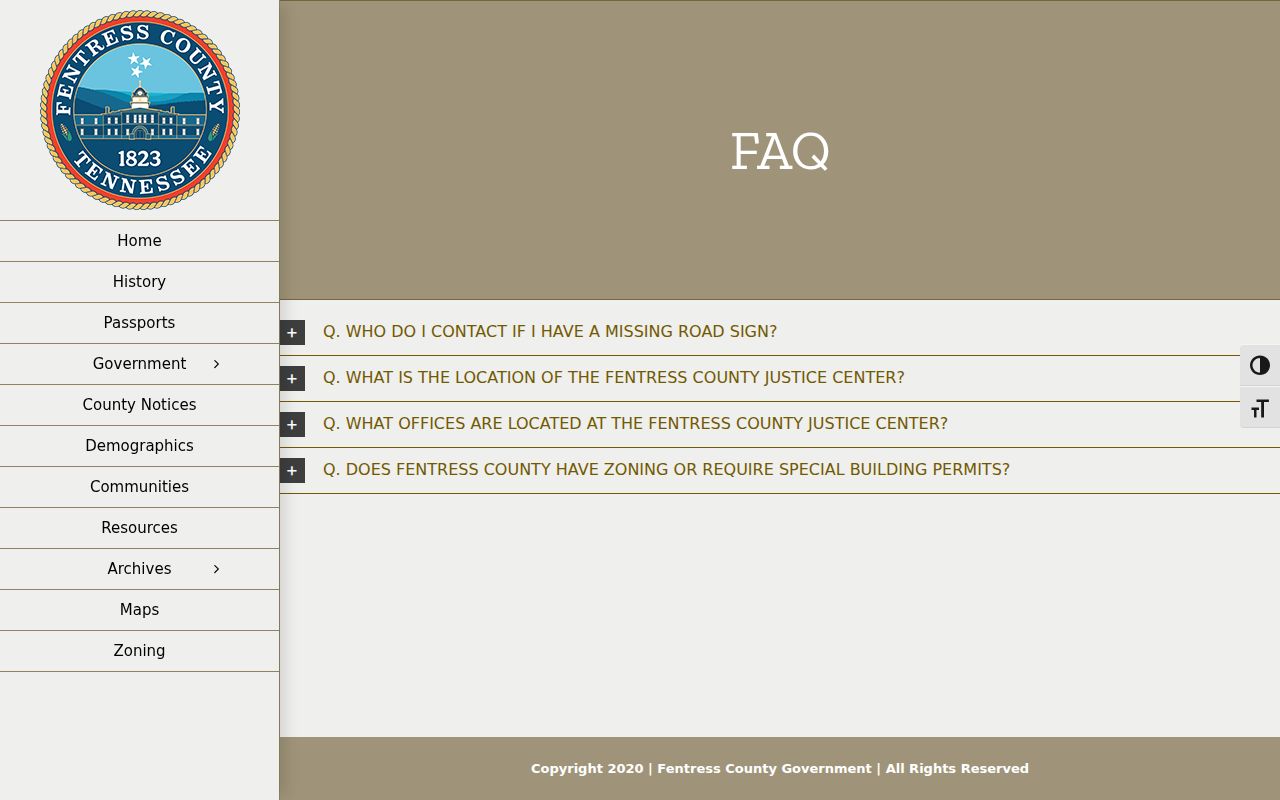
The Circuit Court Clerk handles Circuit, Criminal, General Sessions, and Juvenile Court records in Suite 126. The sheriff occupies Suite 1 and handles law-enforcement, jail, and custody questions. Probation offices are also in the complex, yet a court judgment remains the clearest public source for a probation sentence. The Clerk and Master is a different office tied mainly to Chancery matters. Even the title “County Clerk” names another office and not the criminal docket custodian.
Fentress Circuit Court Clerk
140 Justice Center Drive, Suite 126
Jamestown, TN 38556
931-879-7919
Fax: 931-879-3014
Fentress Sheriff's Department
140 Justice Center Drive, Suite 1
Jamestown, TN 38556
931-879-8142
Weekdays, 8:00 a.m. to 4:00 p.m.
Official Background Checks in Tennessee
The Tennessee Bureau of Investigation is the state's central criminal-history repository. Its TORIS product lets any requester order a $29 Tennessee open-records name check. The result draws from misdemeanor and felony arrests supported by fingerprints submitted in Tennessee and from dispositions later reported to TBI. It does not include aliases, and most juvenile material is excluded. A no-record reply does not rule out federal, out-of-state, non-fingerprinted, or unreported events.
For a review of one's own record where identity must be resolved by fingerprints, use the TBI challenge or authorized record-review route. IdentoGO by IDEMIA captures electronic prints for programs that have a valid service code. No permanent Fentress County enrollment site was confirmed, so the appointment system must show the current location before travel. The FBI Identity History Summary is another subject-only channel. Each official product has a different scope and should not be described as a complete Fentress County criminal record.
The official Tennessee fingerprint scheduler supplies the current appointment and location path.

The scheduler, not an old local listing, should confirm where an authorized applicant can provide prints for the correct service.
| Official channel | Scope | Known cost |
|---|---|---|
| TORIS | Tennessee name-based open-records history | $29, nonrefundable |
| Authorized fingerprint check | Program-defined state or FBI result | Varies by service code |
| FBI Identity History Summary | Subject's own FBI-maintained record | Verify when ordering |
| Fentress court copy | Local filed case documents | Confirm with clerk |
TORIS and Fentress Criminal Records
The TORIS entry screen separates credit-card customers from billable account users and warns that its PDF results work best on a desktop or laptop.
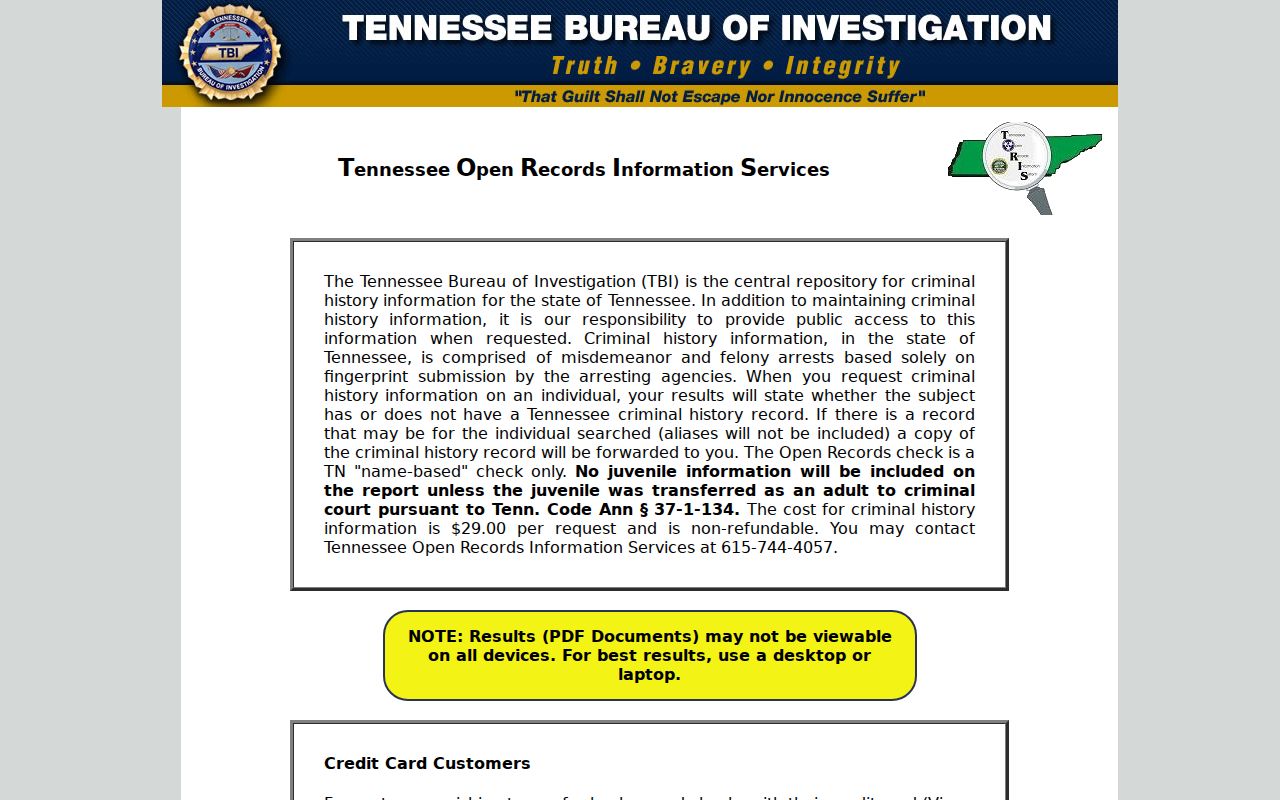
A card customer can pay with Visa, MasterCard, or Discover. TBI also publishes a paper route to its TORIS Unit in Nashville. That form provides mail, fax, email, and in-person delivery choices and asks for requester, subject, alternate-recipient, and payment details. TBI states a three-to-five-business-day expected result period for the paper workflow. The online name check is useful for a broad Tennessee view, but the local docket supplies the pleadings and certified outcome that TORIS cannot show in full.
| TORIS control | Use | Key point |
|---|---|---|
| Credit Card Customers | Begins an individual order | Visa, MasterCard, or Discover |
| User Name and Password | Billable account login | For an existing account |
| Subject identifiers | Matches a legal name | Aliases are not searched |
| PDF result | Delivers the response | Desktop use is recommended |
Kinds of Criminal Records
A single Fentress County event can produce several records, each with its own custodian and meaning. The incident report preserves the investigating agency's account and may exist even if no one is arrested. An arrest report states the officer's grounds and alleged offense. The jail creates a booking file at intake. If prosecution follows, the clerk opens the court file. Fingerprints can connect that arrest cycle to the TBI repository, and a later prison sentence can create a public correctional entry.
- Booking record
- Jail intake, public charge, bond or hold, and release or transfer details.
- Court docket
- The filed charge, hearings, orders, plea, judgment, and outcome maintained by the clerk.
- Repository history
- TBI's identity-linked arrest cycles and reported dispositions based mainly on fingerprints.
- Warrant record
- Process issued by a judicial officer and handled under the issuing court and sheriff's access rules.
- Correctional record
- State custody, sentence, or supervision data that does not serve as a county arrest log.
These distinctions prevent a common error. An arrest is an allegation, not a judgment. Likewise, a booking charge can change when the prosecutor files the case. Read the record that answers the question, then verify it with the office that created it.
Fentress Warrant Records Require a Visit
The official Fentress County directory routes visitors to the sheriff page that publishes a firm rule for warrants, summonses, and civil papers.
Staff will not disclose that information by telephone. A person concerned about possible process is directed to appear at the Sheriff's Department. Court-issued bench warrants or capias entries may also appear in the issuing case file, so the Circuit Court Clerk can help identify public docket material. No official online county warrant list was located. A failed web search therefore cannot establish that no warrant exists. Counsel can help plan a safe response when a reader is trying to resolve their own warrant.
Do not rely on a phone or web result. Follow the sheriff's in-person rule and check the issuing court file when appropriate.
Fentress County Criminal Records: What They Contain
A TBI repository history groups information by arrest cycle. It can include subject identifiers, state or fingerprint identifiers, arresting agency, arrest date, charge at arrest, court tracking, disposition, and sentence when reported. The local case file goes deeper into procedure. It may show the docket number, filing date, charging document, hearings, attorneys, motions, plea, judgment, fines, costs, and sentence. Booking data is strongest on short-term custody and release.
| Name and identifiers | Displayed name plus identity keys used by the source system. |
|---|---|
| Arrest and booking | Agency, date, intake charge, booking number, bond, hold, and release or transfer. |
| Charges and statutes | Alleged or filed offense, count, Tennessee citation, and felony or misdemeanor class. |
| Disposition | Dismissal, plea, verdict, diversion, conviction, or another recorded outcome. |
| Sentence | Custody, probation, fines, costs, restitution when public, and credit information. |
| Source status | Case status, document availability, certification, or current custody and supervision. |
Missing fingerprints, a name mismatch, reporting lag, or an unreported outcome can leave gaps. A certified Fentress County court disposition gives TBI authoritative proof when a person challenges an inaccurate repository entry.
Fentress Custody Records Change Systems
Current county-jail custody begins with the sheriff because Fentress County publishes no official online roster. The jail can address a booking number, public charges, bond or hold, court assignment, and transfer or release status. Once a person moves into state custody after sentence, the county inquiry may no longer answer the current-status question.
The TDOC FOIL search is the state correctional layer for qualifying Tennessee offenders.
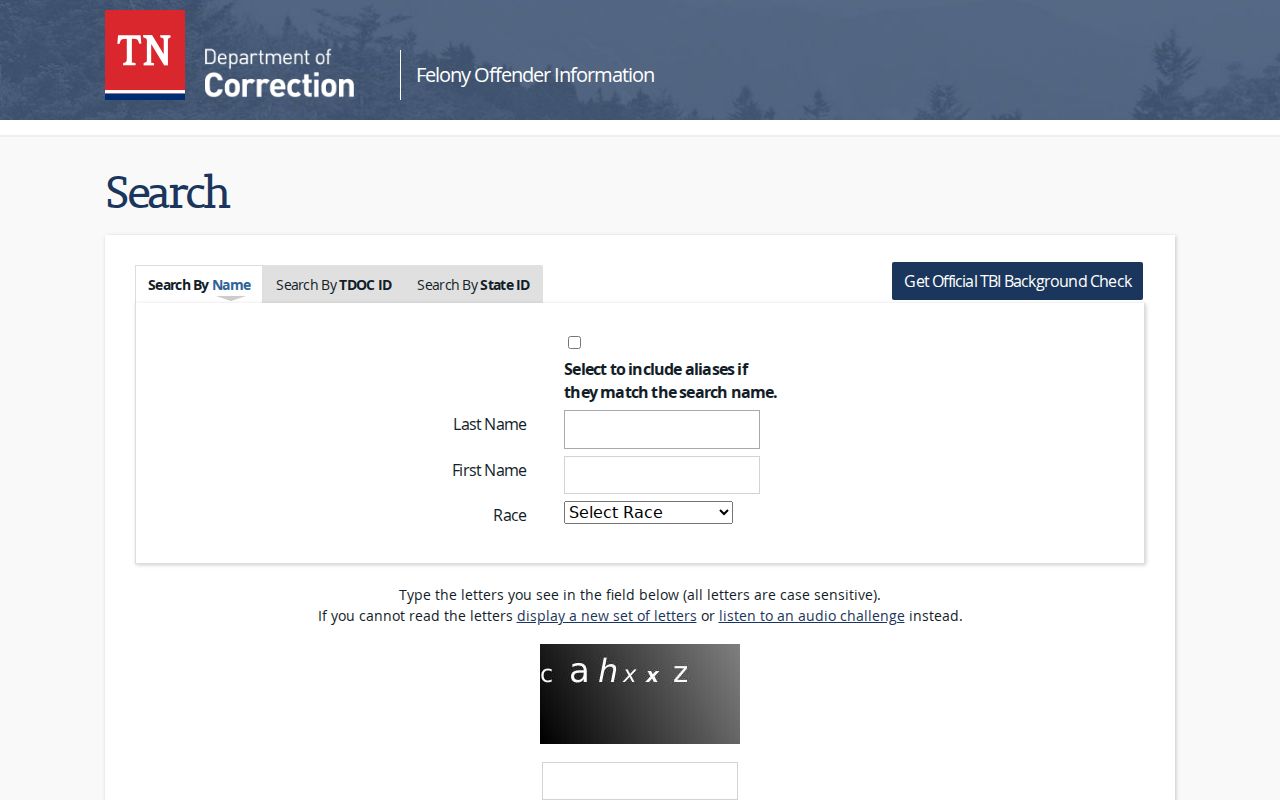
FOIL is not a booking log and should not be used to infer that no recent arrest occurred. VINELink can supplement supported custody notifications. Probation and parole are also distinct: a Fentress County judgment shows a probation sentence, TDOC Community Supervision handles state felony supervision, and the Tennessee Board of Parole makes release decisions under its authority.
Tennessee Public Access Laws
The Tennessee Public Records Act is the baseline for sheriff and county administrative records. Tennessee citizens may inspect public records during business hours unless another law makes the material confidential. Copy requests can be written, and the custodian may charge under an adopted schedule. Court access also depends on judicial rules and sealing orders, while TBI dissemination follows the separate TORIS framework.
Key Tennessee rules:
Tenn. Code Ann. § 10-7-503 gives the general citizen inspection right and response framework.
Tenn. Code Ann. § 10-7-506 covers copies and reasonable production charges.
Tenn. Code Ann. § 10-7-504 protects records made confidential by law.
Tenn. Code Ann. § 40-38-111 protects specified crime-victim identifying information.
Tenn. Code Ann. § 37-1-134 addresses the juvenile transfer exception relevant to adult records.
Active investigative files, juvenile records, medical details, protected victim information, and jail-security material may be withheld or redacted. If only part is exempt, request the segregable public part. Public access never changes the rule that an allegation is not proof of guilt.
Fentress Criminal Records by TPRA Request
Fentress County publishes both a countywide records form and a signed public-records policy. The Public Records Request Coordinator can route a request, though the fastest path often goes straight to the known custodian. An inspection request may be oral or written. A request for copies must be written. The county need only provide records that exist and does not have to create a new report or compilation.
The request should name the record type, date range, location, subject matter, and incident or case number when known. Choose inspection or copies and a delivery method. County policy makes inspection free. Standard copies cost $0.15 per black-and-white page and $0.50 per color page. Labor is charged after the first hour, charges under $5 are waived, and advance payment may be required above $5. A status response is due within seven business days when records cannot be produced promptly.
| Request field | What to provide | Why it helps |
|---|---|---|
| Requester details | Name, contact, address, Tennessee citizenship | Supports response and eligibility |
| Record description | Type, dates, place, subject, keywords | Narrows the search |
| Request choice | Inspection, copies, or both | Controls form and possible fees |
| Delivery | Pickup, mail, electronic if available, or other | Sets the production route |
Restricted, Sealed & Expunged Records
Tennessee Code § 40-32-101 permits removal and destruction of qualifying public criminal records. Dismissal, no true bill, not guilty, or arrest and release without charge can support a no-cost route when the statute applies. Certain diversion completions and convictions have separate rules, waiting periods, excluded offenses, and costs. A charge label alone cannot prove eligibility.
The process begins in the court that owned the Fentress County case, not at TBI. Identify the docket through the Circuit Court Clerk, confirm every count and its outcome, complete the required paperwork, and keep a certified entered order. The clerk distributes a qualifying order to agencies such as the arresting office, jail, TDOC, and TBI as applicable. A Tennessee county order does not erase an out-of-state or federal record. Juvenile, sealed, protected-victim, and some investigative material also stays outside ordinary public access under separate rules.
Correcting Fentress Criminal History Gaps
A TORIS entry can lack an outcome even when the Fentress County court closed the case. Fingerprints may not have matched, the clerk's report may lag, or identifiers may differ. First obtain the local docket and a certified disposition from the Circuit Court Clerk. Mark the arrest cycle or outcome that appears wrong, then follow TBI's record-review and challenge instructions.
The TBI background-check overview provides the official state context for record review and correction.
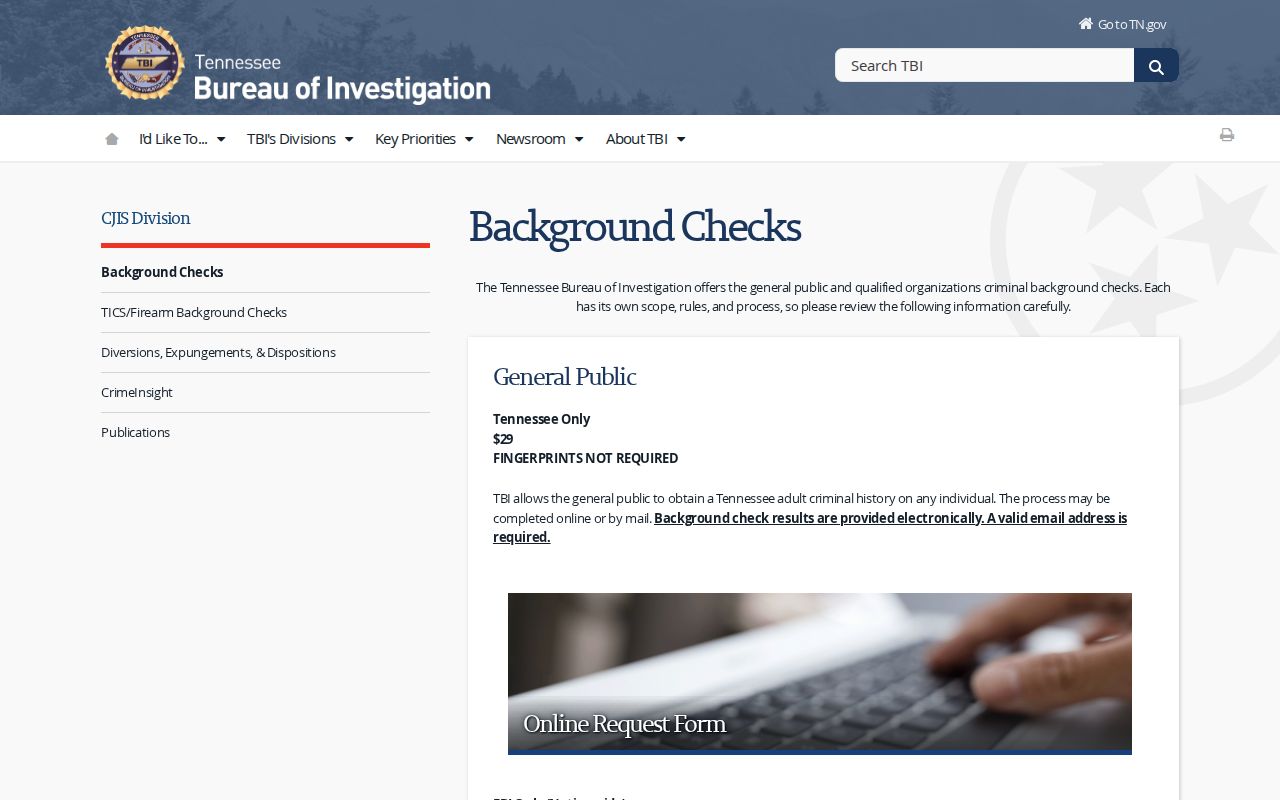
The clerk can fix its own docket but cannot directly rewrite each downstream system. TBI can reconcile its repository after it receives authoritative proof. This challenge route corrects identity or reporting errors. It is not expungement, and an accurate record that may qualify for removal must use the court process.
Fentress Court Records Beyond Trial Files
Tennessee has no single complete statewide public search for Fentress County trial cases. The local Circuit Court Clerk remains the source for Criminal Court and General Sessions files. The statewide Public Case History tool serves appellate courts only. It can show a case number, style, status, filing dates, originating county and court, judges, events, and public document links when available.
The Tennessee appellate case-history screen is useful only after a case reaches the state's appellate layer.
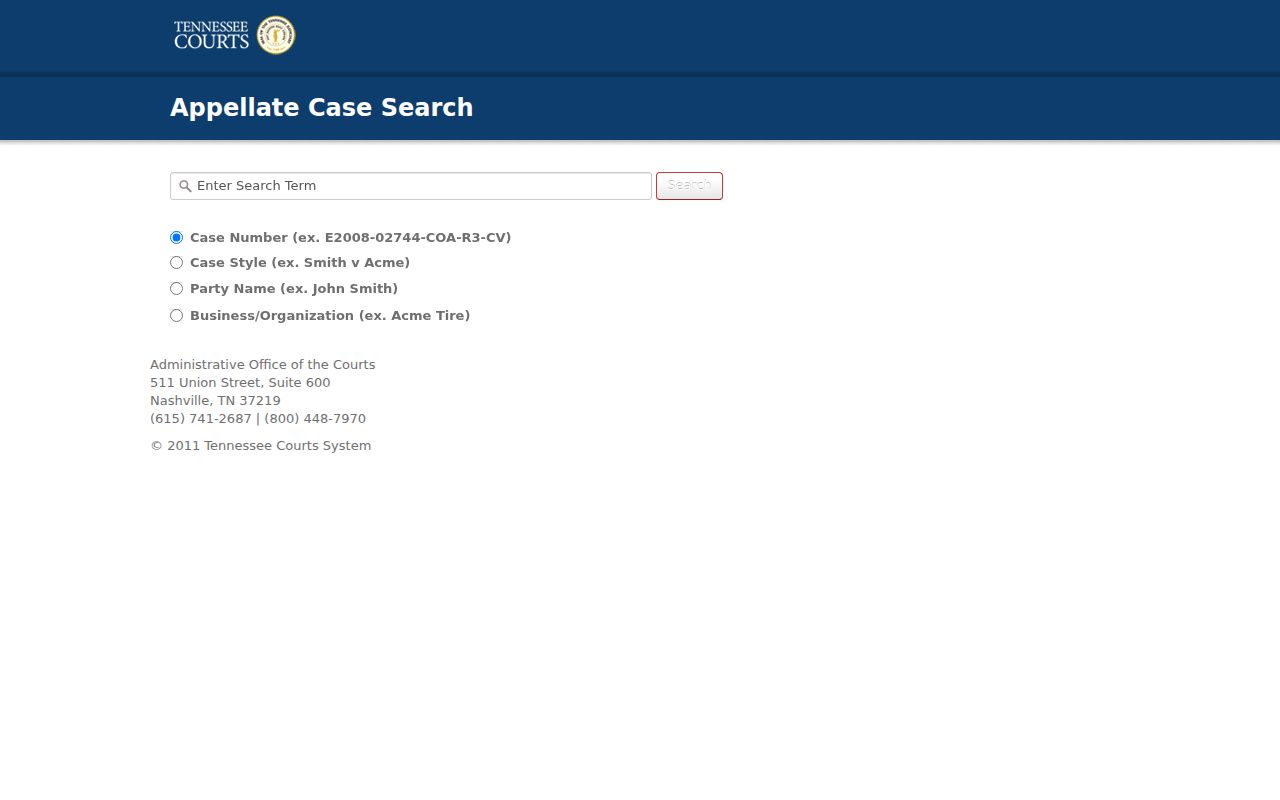
It does not replace a trial docket search in Suite 126. The distinction matters when a reader has only a name and a year. Start locally, identify the docket and court, and then check the appellate system if the Fentress County file shows an appeal. The local court case lookup follows the filed charge and judgment path in more detail.
Federal Criminal Records From Fentress
Federal cases leave the county system. Fentress County lies in the Northeastern Division of the U.S. District Court for the Middle District of Tennessee. PACER holds federal docket entries and filed documents, while the Bureau of Prisons locator addresses federal custody. Neither tool replaces a Tennessee court file, TORIS history, or sheriff booking inquiry.
The official PACER site provides registration and federal court-record access.
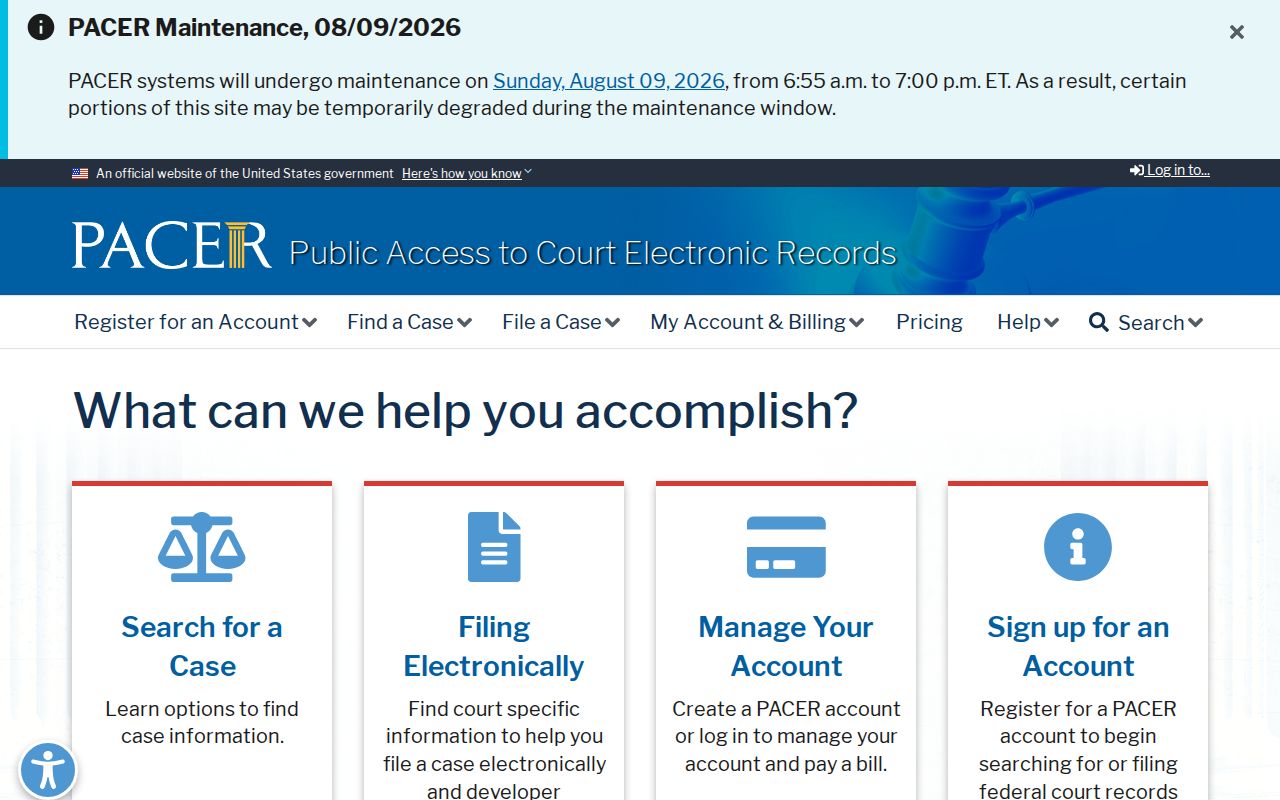
Federal in-person and mailed filings route through the Nashville clerk even though Cookeville hosts the division's session courthouse. Use the federal criminal docket contact for filing questions. A federal custody question belongs with BOP, and a subject's FBI Identity History Summary is yet another product with a different purpose.
Fentress Criminal Records Across Two Centuries
Fentress County's record geography has deep roots. County history traces local courts from Three Forks of Wolf River to Jamestown courthouses built in 1828, 1860, and 1901. John M. Clemens, the county's first circuit clerk and Mark Twain's father, is credited in local history with plans for the first courthouse and jail. The current shared Justice Center continues the close physical link between clerk and sheriff, even though their records remain legally distinct.
The official Fentress County history gives the local background behind those offices. That long record also explains why older files may not behave like new digital records. Ask the clerk about archive coverage, copy options, and certification rather than assuming every case is online.
City-by-City Criminal Records in Fentress County
Fentress County has two incorporated municipalities. Jamestown is the county seat and has a police department and City Court, while Allardt's current official roster identifies no municipal police or court staff. A city-created report begins with the creating city or police office. County booking and filed state cases then route to the sheriff and Circuit Court Clerk. Statewide history remains a separate TORIS check.
Jamestown Record Check
Population 2,135. City Court handles municipal matters, while state cases and county custody move to the Fentress offices.
Allardt Record Check
Population 555. Current official listings support city-recorder and county sheriff fallbacks, not an invented city portal.
Do not use the county's crime totals as city counts. The research found no clean official municipal crime table for either place. Each city record check instead follows its documented office and case path.